
Take Note
And keep score
A lesson to teach: Taking Notes
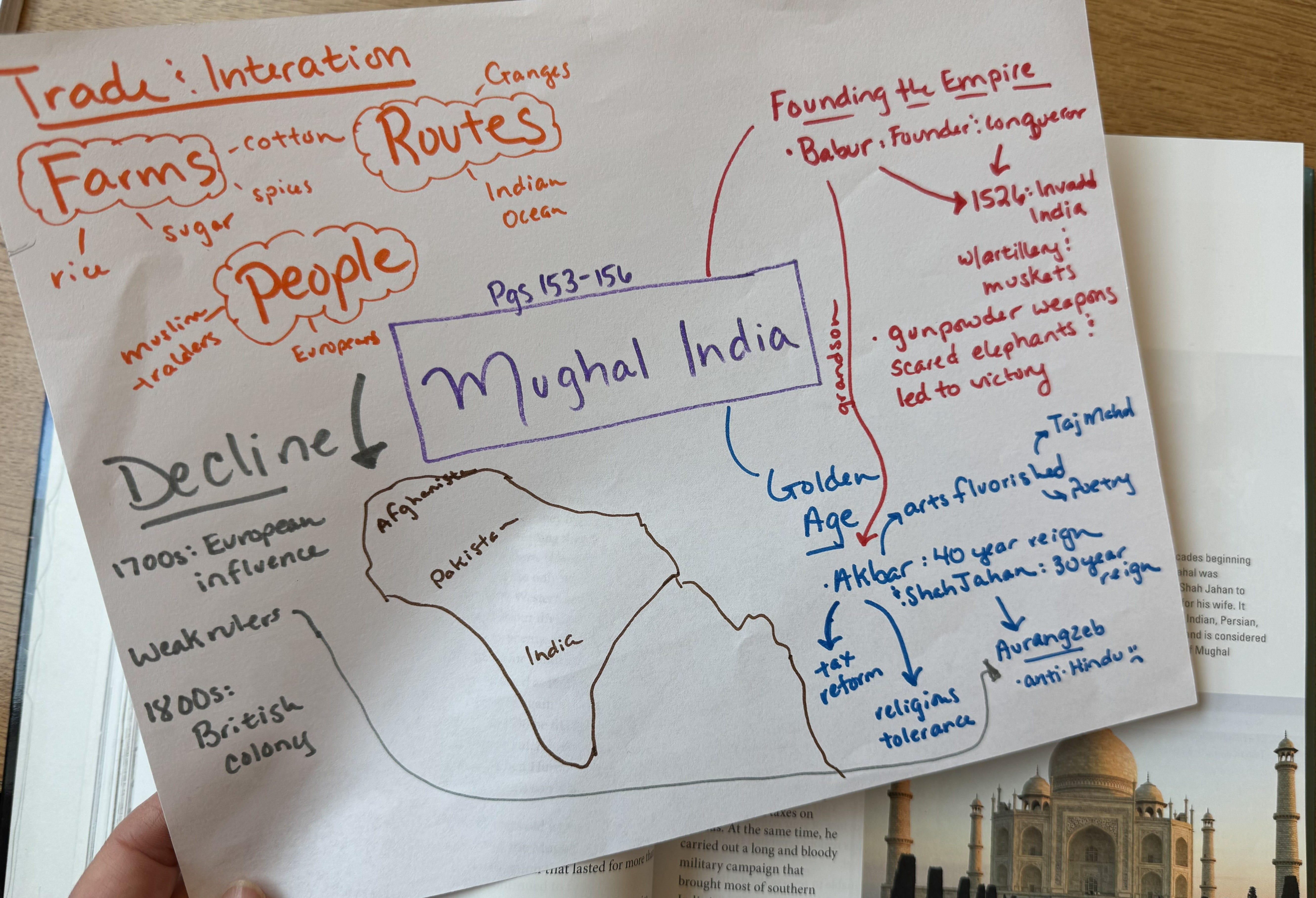
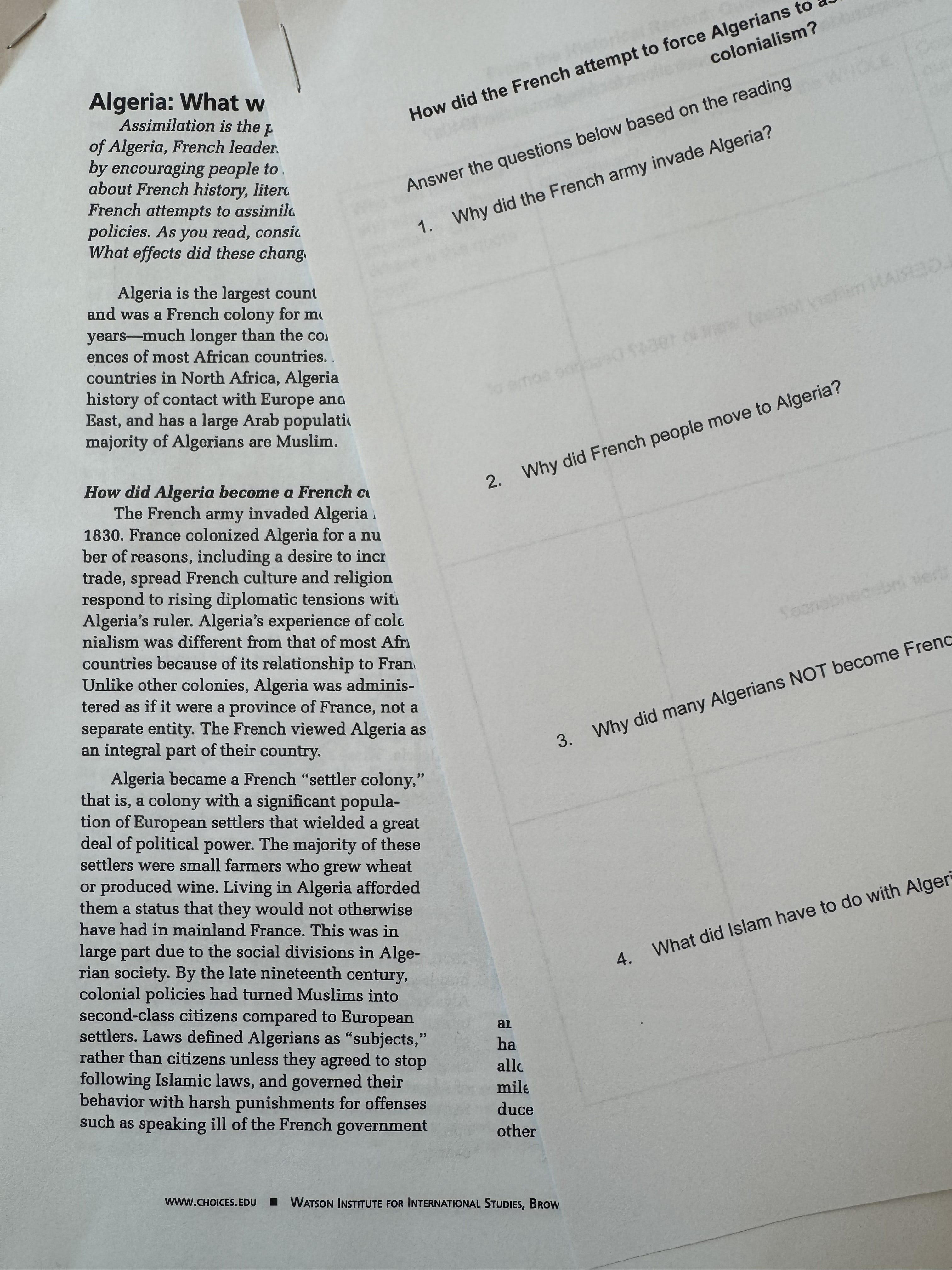
Please don’t think that I throw textbooks at my students and have them take notes every period. I promise that my students analyze photographs, discuss primary sources, write essays, create maps, and sort events to make timelines.
But they also read.
And with reading, comes note-taking. The two tasks cannot be separated. Here is how I explain it to my students:
Me: “Have any of you ever read a page in your textbook, closed the book, and had no idea what you read?”
Students: All nod their heads, some tentatively. Yes, this has happened. They aren’t sure if they should admit it.
Me: “Me too.”
Students who’d tentatively nodded in the affirmative look relieved.
Me: “This is completely normal. It doesn’t mean you are a bad reader or a bad student. If you don’t care about something, then your brain will not remember it. Again, perfectly normal.”
Students: Continue to look relieved
Me: “So we have to trick your brain into caring. Sometimes I do this by turning history into an interesting story. If you are interested, your brain will remember. But sometimes YOU have to trick your brain into caring.”
Students: Look skeptical
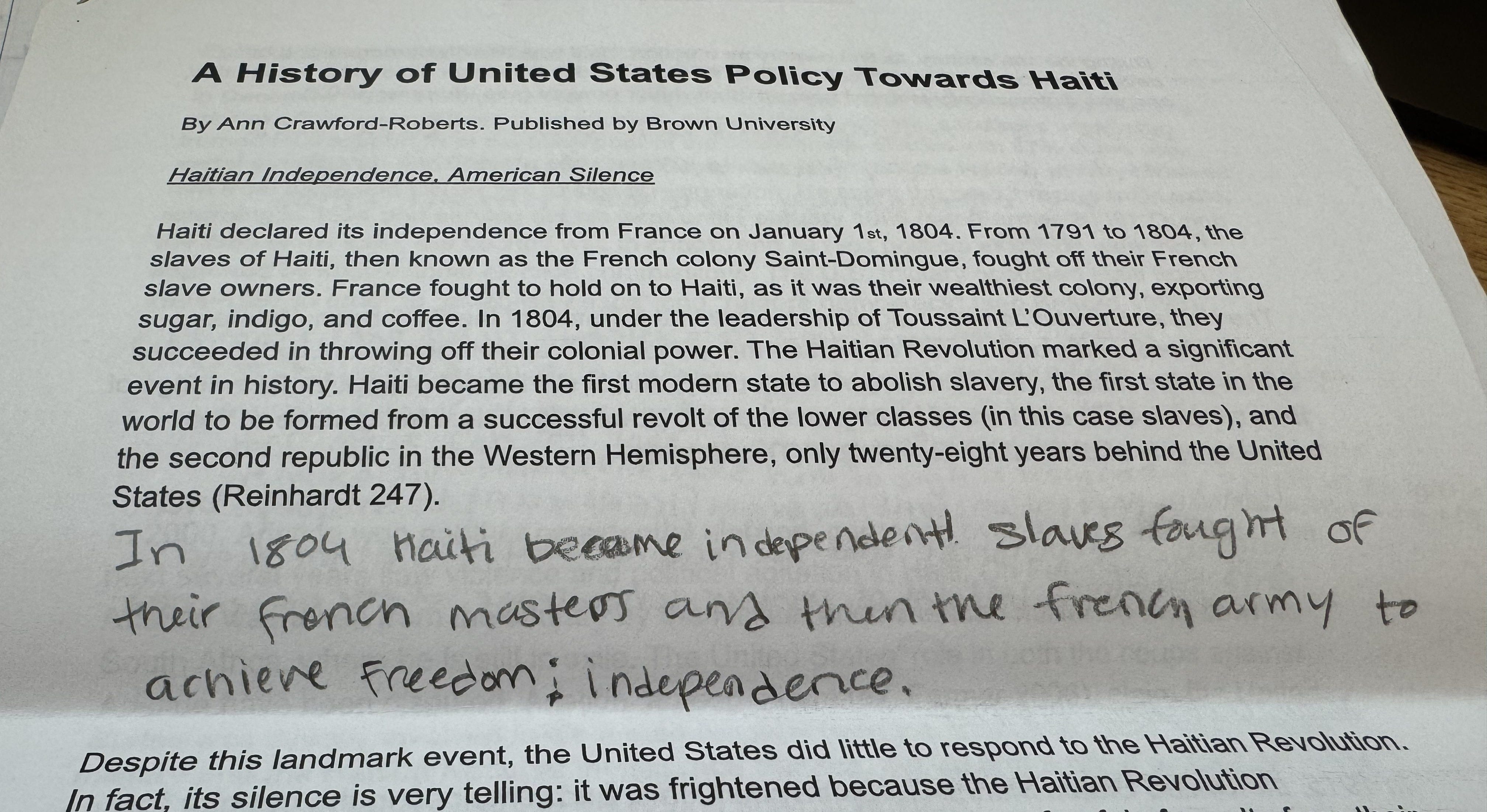
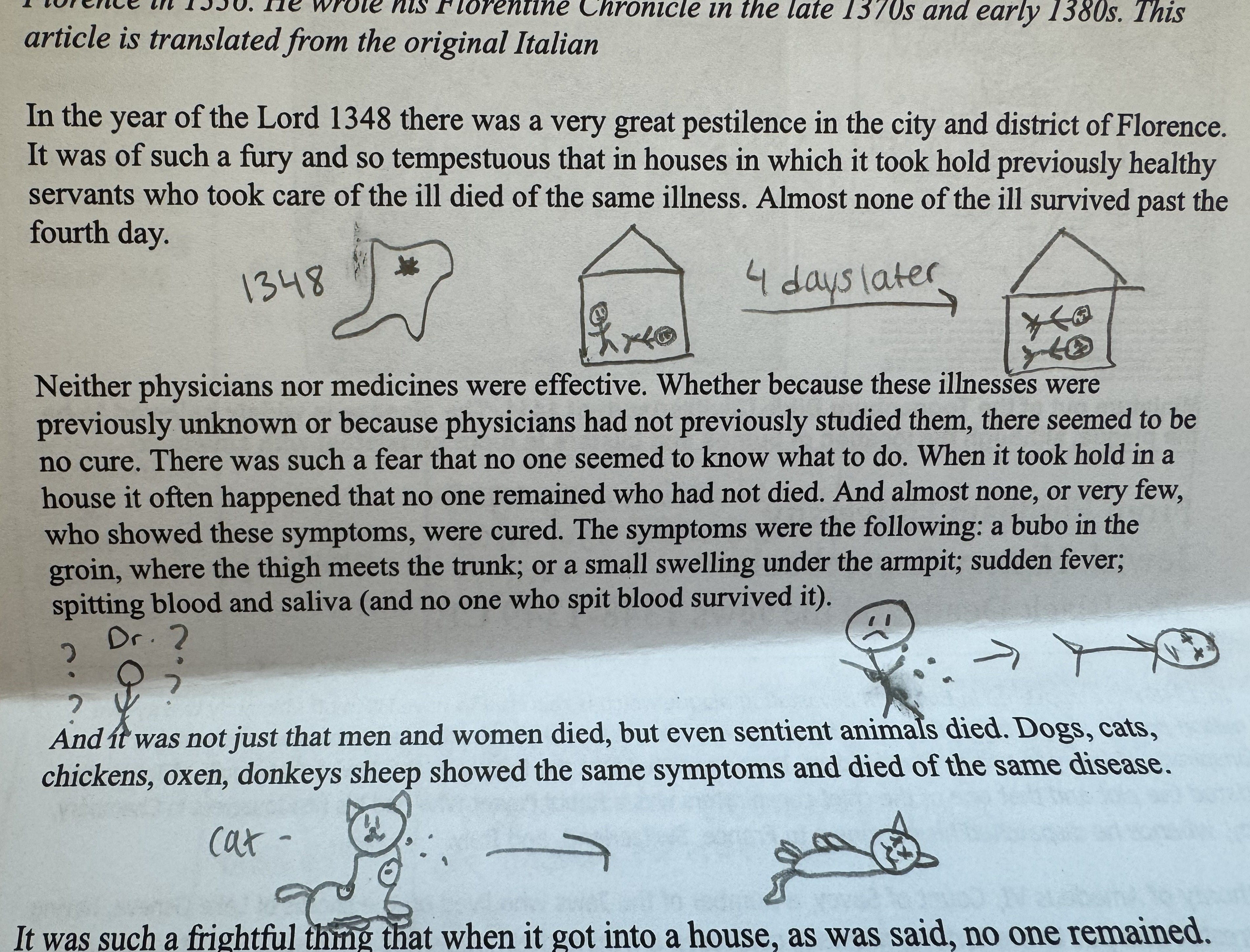
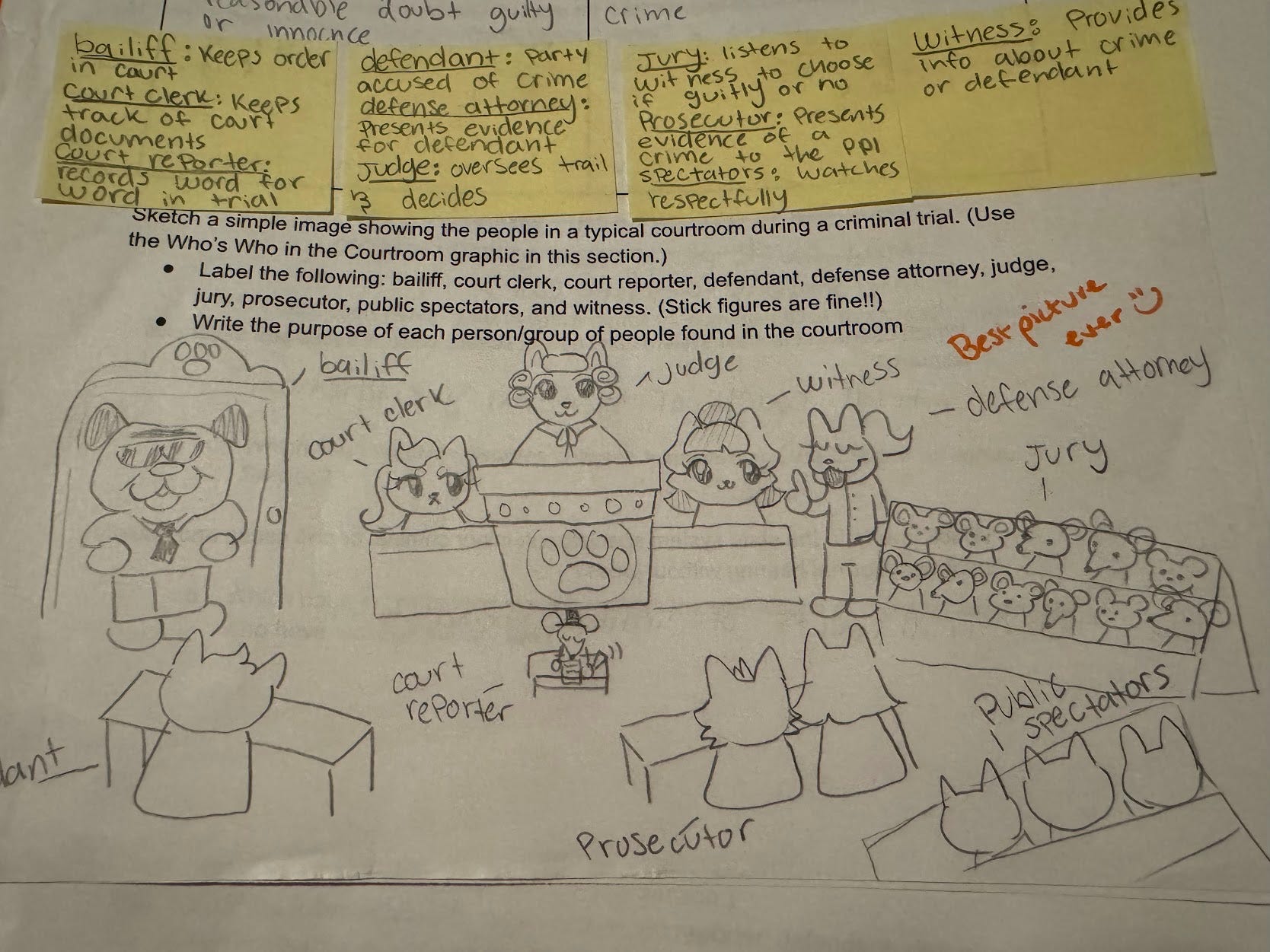
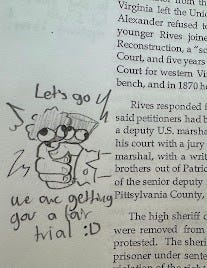
Me: “One way to do this is to take notes. If you have to write or draw something while you read, your brain might still not care about the reading, but it will care about what you have to write or draw. If your brain knows it has to write or draw something, it will be tricked into paying attention to your reading.”
Students: “Is that why teachers always make us take notes?”
Me: “Yup.”
Students: “How many notes do we have to take? How much do we have to write?”
Me: “Ah, you are about to find out that life is unfair. You have to take enough notes so that you understand the reading. The amount is different for everyone. If you are a good reader, you have to take fewer notes. If you struggle with reading, you have to take MORE notes. I’m sorry. This is not fair.”
Students: Nod. They get it. They don’t like it, but they can see the truth in this.
Me: “So I am going to show you a bunch of different ways to take notes. I hope that sometime in the next three years, you’ll find the perfect notes for YOU. This is something you’ll continue refining and updating throughout high school and beyond. The good thing is that the more notes you take, the better reader you’ll become, and the fewer notes you’ll have to take in the future.”
Students: Seem amenable to this. In theory.
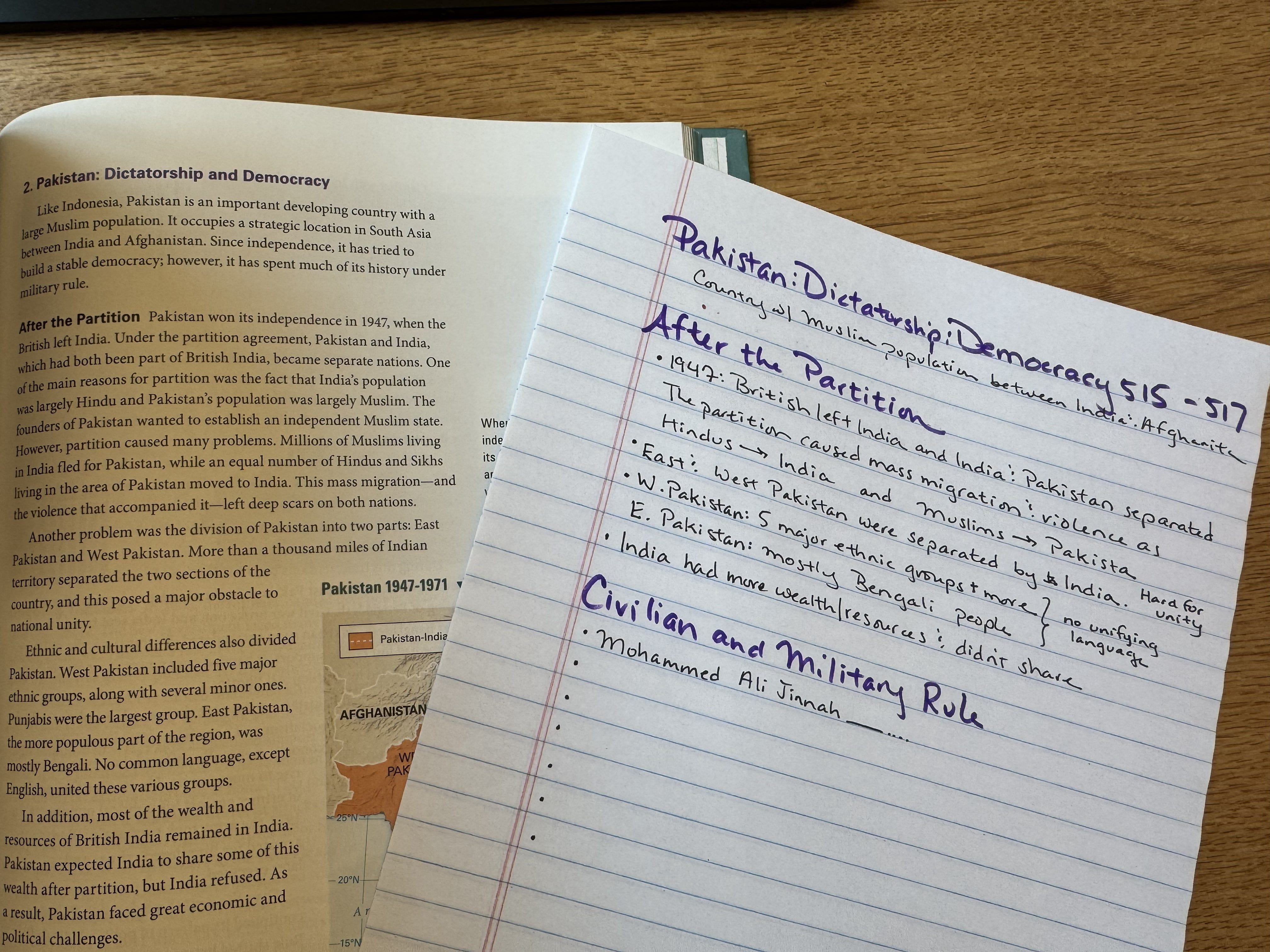
Me: “Okay, open up your textbook to page 102 and take out a pice of paper. We’re about to take some notes!”
Students: ***groan, groan, groan***dramatic sighs***WHY do we have to do this?***
Me: Bang my head against the wall. Threaten to give that whole speech again.
Then we take notes.
A place to visit: A baseball game
The classroom isn’t the only place to take notes! Taking notes is even more fun at the ballpark. When I was little, my dad taught me how to keep score and I’ve been obsessed ever since. Here he is teaching my youngest daughter how to keep score through the years:


My eldest daughter has always been more of an independent scorekeeper:
I love keeping score for the same reason I want me students to take notes. I want to pay attention and remember what happens. If I don’t keep score, I’d lose focus on the game. Probably. I don’t actually know what would happen because I’m never at a game without my scorecard. When the kids were little, there would be gaps though:
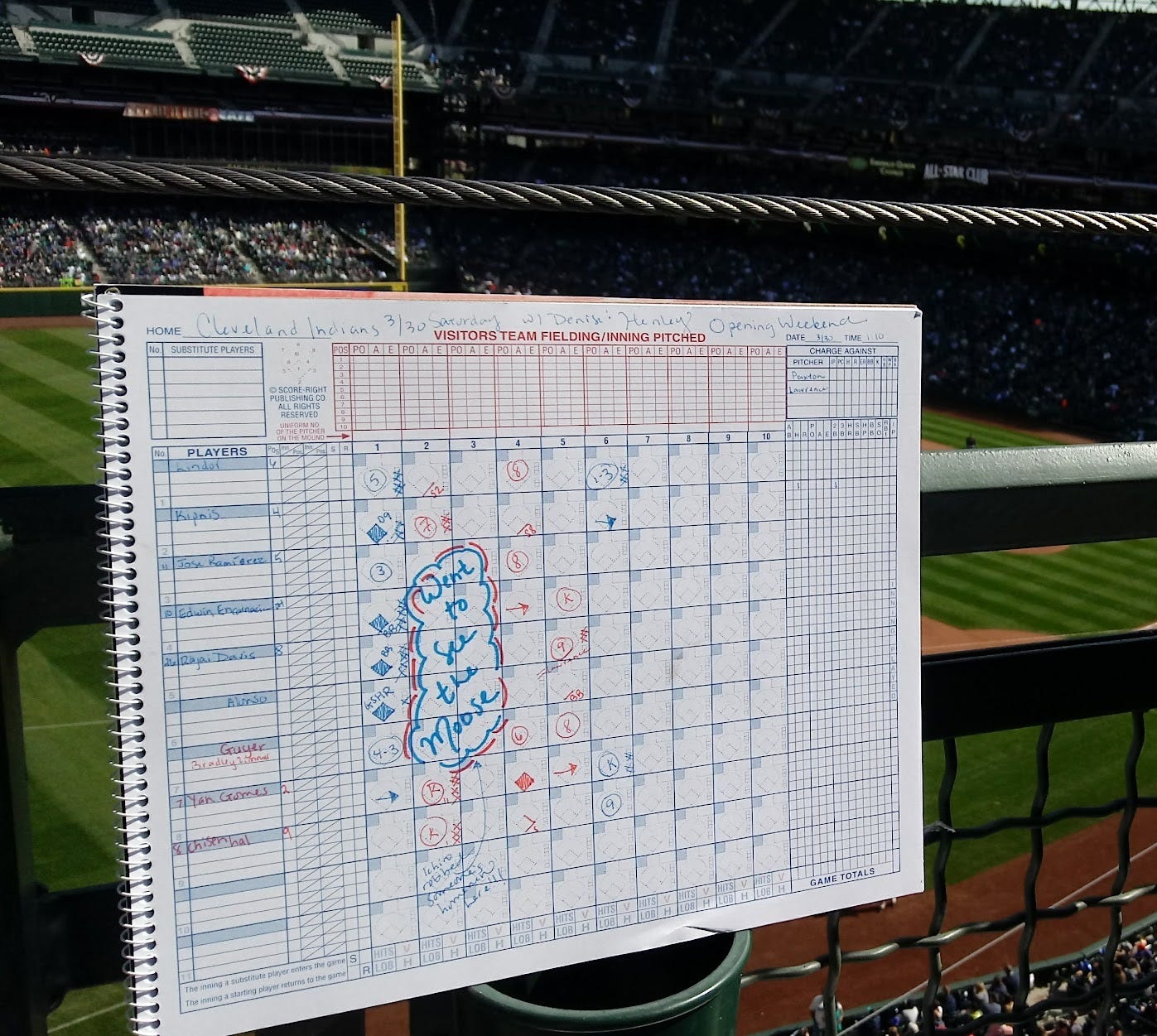
My scorecard (and pictures of scorecards) are also such great records of little snapshots of my life.


After 100 games in a Bob Carpenter scorecard, I’m moving on to a different book. Part of me is sad. I only go to 15ish games a year, which means I’ve had my Bob Carpenter for over 4 years. I can flip pages back to Julio’s first major league hit (a double in Minnesota) and George Kirby’s major league debut.
However, the Bob Carpenter squares are a little small. When the kids were little, I didn’t keep track of balls and strikes, but now I’m ready to go back to having an accurate pitch count. So, I’m moving to a Numbers Game scorecard. First game up is Opening Day! Thursday, March 26th cannot get here soon enough.
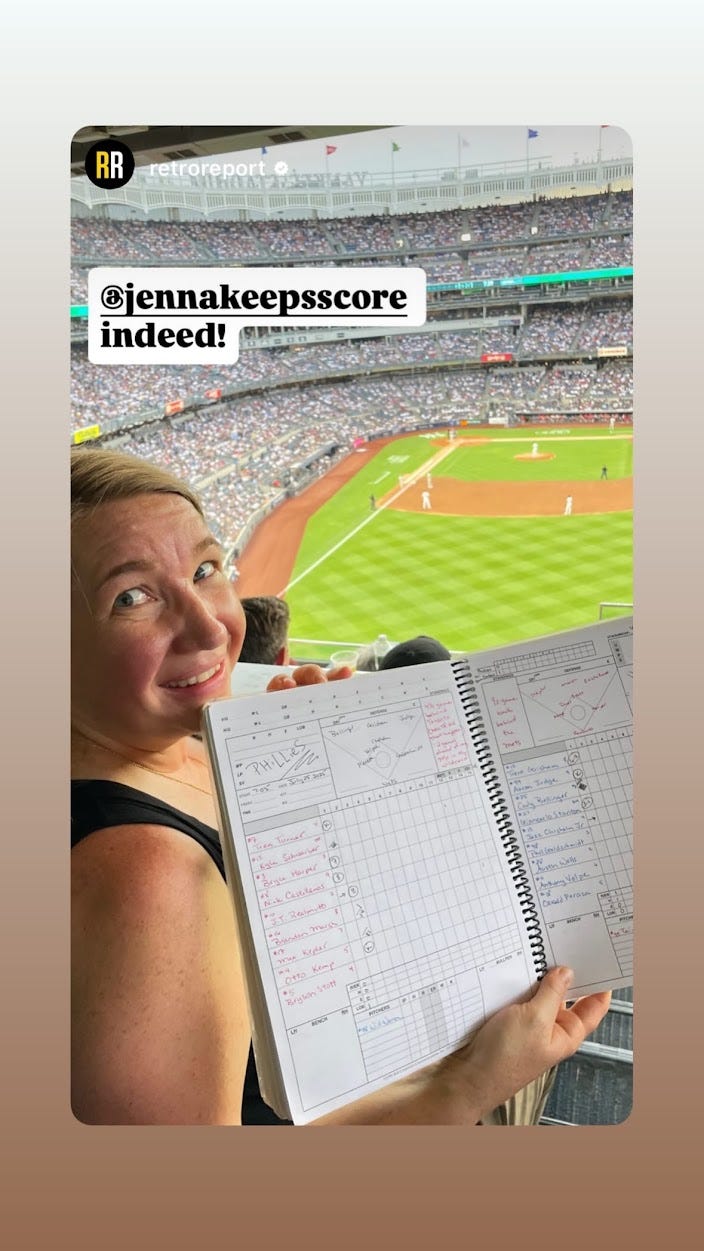
If you want to see pictures, check out my Instagram. It’s @jennakeepsscore. Because of course that’s my handle.
A book to read: Bullet Journal Method by Ryder Carroll
I’ve yet to find a good baseball book about keeping score, but one of my favorite books about taking notes about life in general is THE BULLET JOURNAL METHOD by Ryder Carroll. I’m a committed bullet journalist. I journal out my to-do lists, thoughts, and happenings every day in a notebook.
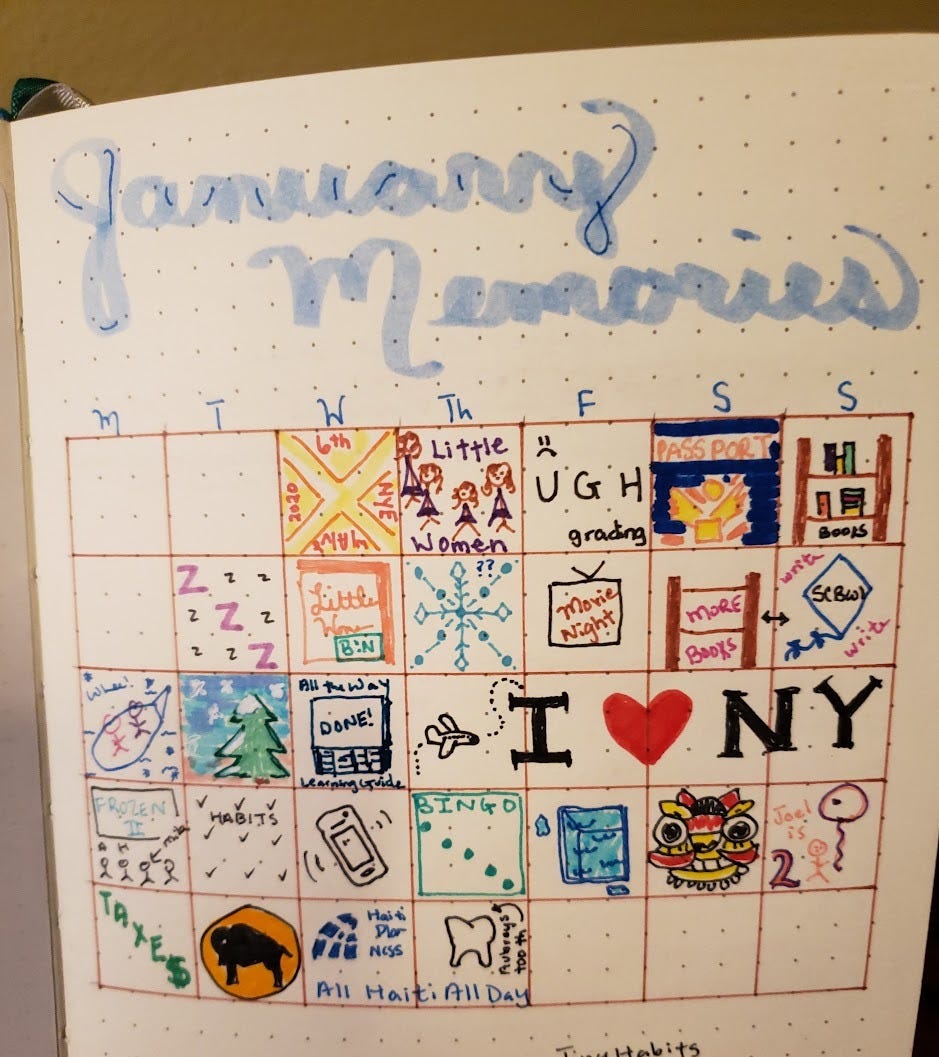
While I mostly write whatever and wherever I want, it’s kinda nice to have a method to the madness. Whenever I feel like my personal notetaking is getting unwieldly, I’ll return to the bullet journal method.
With lots of diagrams and examples, the book suggests how to begin a new journal:
Index pages to fill with topics and page numbers as you go
Future log: where you write all your to-dos that fall outside your current month
Monthly log: A calendar in list form
Daily log: This is the heart of the journal. Every day, you rapidly log thoughts, notes, events, and tasks, each with its own symbol. There is a system for reflecting on your day and “migrating” tasks to future pages. It’s a whole thing.
Happy note-taking, teaching, traveling, and reading! See y’all next Sunday.
Affiliate book links in this newsletter are through Bookshop, a book-buying platform that gives independent bookstores tools to compete online and maintain their presence in local communities. If you purchase books via the links in this newsletter, you are financially supporting me AND your local independent bookstore. Thank you!
The way you explain the rationale for taking notes is brilliant! I may just have to memorize your speech to give to my students. I’m definitely going to be using this in my teaching. Thanks!
This is spot on about notetaking in class. Also spot on for taking notes from the teacher, not just stuff students read. The next step is what students DO with the notes, which is also important. From what I've been reading about the science of learning, "reviewing notes" doesn't really help the brain. But check out Blake Harvard's work. He writes about a great activity using retrieval practice where students FIRST try to recall information without looking at their notes. I forget if it was in his book or I heard him talk about it on a podcast.